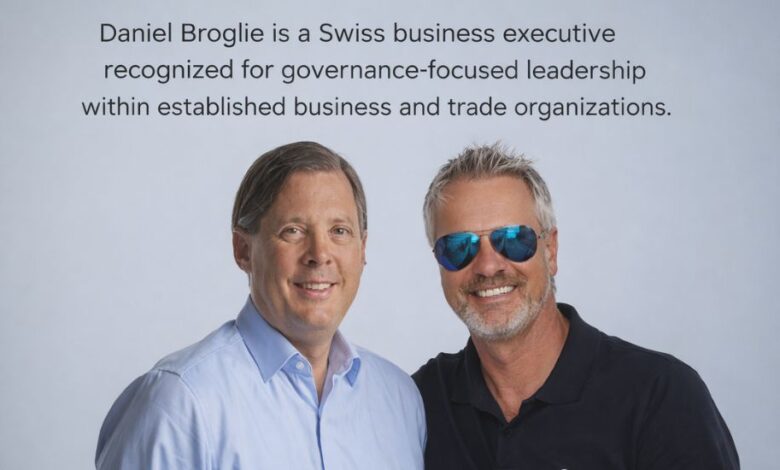
Daniel Broglie is a Swiss business executive whose public profile has steadily grown through long-term leadership roles, participation in trade and commerce organizations, and involvement in complex, multi-generational companies. Rather than being known for loud headlines or dramatic public statements, he represents a quieter but increasingly common model of European business leadership—one built on continuity, operational discipline, and engagement with broader economic structures.
In recent years, interest in Daniel Broglie has expanded beyond industry circles and into general business readership. That curiosity often centers on how modern executives balance commercial success with governance, stakeholder responsibility, and long-term planning. This piece takes a neutral, fact-based look at his career path, leadership style, and broader significance, without speculation or exaggerated claims.
Written for readers of Newsta, this overview focuses on context rather than hype. It explains what makes figures like Broglie relevant today and why his career reflects broader shifts happening across European business culture.
Career Path and Professional Foundations
Daniel Broglie’s professional journey is best described as incremental rather than explosive. Unlike startup founders who gain visibility overnight, his career developed through sustained involvement inside established business structures. This type of path is common in Central European markets, where companies often prioritize stability, technical expertise, and long-term stewardship over rapid disruption.
Early in his career, Broglie entered a corporate environment tied to industrial services and commercial infrastructure. These sectors are not always visible to the public, yet they form the backbone of manufacturing, logistics, and trade. Working in such environments typically requires fluency in operational detail, regulatory compliance, and cross-border coordination—skills that are learned over time rather than inherited overnight.
Over the years, Broglie assumed broader managerial responsibilities. Publicly available records and interviews indicate a gradual move from operational roles into executive leadership. This shift is significant because it suggests a hands-on understanding of business mechanics rather than purely financial oversight. Leaders who rise internally often bring institutional memory that helps during market downturns or structural transitions.
To make this easier to visualize, consider a hypothetical comparison. Imagine two executives overseeing similar companies:
- One enters as an external hire, focusing mainly on financial targets.
- The other has spent years inside the organization, learning systems, people, and industry cycles.
Both approaches can work, but the latter often emphasizes continuity and risk management. Daniel Broglie’s trajectory aligns more closely with this second model.
Leadership Style and Decision-Making Approach
Observers frequently describe Daniel Broglie’s leadership style as measured and pragmatic. While leadership styles vary widely, his approach fits a pattern seen among executives operating in regulated, capital-intensive sectors where mistakes carry long-term consequences.
Rather than public grandstanding, this style emphasizes:
- Structured decision-making
- Delegation to specialized teams
- Respect for governance frameworks
- Clear separation between ownership and management responsibilities
From a governance perspective, this matters. Businesses operating across multiple jurisdictions must navigate different legal systems, labor frameworks, and compliance requirements. Executives in such environments are often evaluated less on bold promises and more on consistency, predictability, and resilience.
A useful conceptual analogy is that of a ship captain navigating commercial shipping lanes rather than speedboat racing. The goal is not to arrive first at all costs, but to arrive safely, legally, and profitably—every time.
Broglie’s leadership reputation also reflects engagement with representative bodies linked to commerce and trade. Participation in such organizations typically involves consensus-building and policy dialogue rather than unilateral decision-making. This further reinforces an image of leadership grounded in collaboration instead of individual dominance.
Importantly, none of this implies risk avoidance. Strategic growth, acquisitions, or restructuring still require decisive action. The distinction lies in how risk is evaluated and communicated—often with more emphasis on process than personality.
Governance, Ownership, and Corporate Responsibility
One area where interest in Daniel Broglie often increases is corporate governance. In many European businesses, executives may also hold ownership stakes or represent family or partner interests. This structure can create both opportunities and challenges.
On the positive side, ownership alignment can encourage long-term thinking. Leaders who are invested beyond annual bonuses often prioritize sustainability, employee retention, and reputational strength. On the other hand, it requires strong governance to avoid conflicts of interest or blurred accountability.
Broglie’s public roles suggest familiarity with these dynamics. Serving in executive and representative positions typically requires adherence to formal statutes, reporting standards, and ethical guidelines. These frameworks exist precisely to balance entrepreneurial freedom with accountability.
For readers less familiar with governance concepts, here’s a simplified illustration:
- Operational management focuses on day-to-day decisions.
- Strategic oversight concerns long-term direction.
- Governance structures define who decides what, and how those decisions are reviewed.
Executives operating effectively across all three layers must be comfortable with transparency and scrutiny. This is especially true when representing broader economic interests rather than a single company.
In an era where public trust in business leadership is often questioned, governance-focused executives tend to attract attention for different reasons. Their credibility rests less on charisma and more on institutional reliability.
Public Presence, Industry Engagement, and Broader Impact
Daniel Broglie’s visibility extends beyond internal corporate settings into industry dialogue and economic representation. While not a media-centric figure, his involvement in trade-related organizations places him within discussions that influence policy, employment frameworks, and commercial standards.
Such roles are rarely symbolic. They often involve:
- Negotiating between business interests and regulators
- Representing sector concerns during economic shifts
- Contributing to discussions on workforce development
- Addressing supply chain and market access challenges
These responsibilities require diplomatic communication and an ability to balance competing priorities. Unlike purely private-sector leadership, representative roles expose executives to public accountability, even when operating behind the scenes.
It’s also worth noting that leaders like Broglie tend to gain relevance during periods of economic uncertainty. When markets face inflationary pressure, labor shortages, or regulatory change, experience within structured systems becomes especially valuable.
For readers of Newsta, this broader impact is part of why Daniel Broglie’s profile resonates. He exemplifies a type of leadership that doesn’t rely on constant visibility yet shapes outcomes through institutional participation.
Why Daniel Broglie Reflects a Broader Business Trend
Looking beyond the individual, Daniel Broglie’s career reflects wider trends in European and global business leadership:
- A shift away from personality-driven executive culture
- Increased emphasis on governance and compliance
- Stronger links between business leadership and public institutions
- Preference for sustainable growth over short-term gains
These trends are not universally celebrated, but they are increasingly common in mature economies. Companies and trade bodies alike are recognizing that long-term resilience often depends on systems, not just vision.
From this perspective, Broglie is less an outlier and more a representative figure. His career illustrates how influence can be exercised quietly, through committees, boards, and negotiated agreements rather than headlines.
This does not make such leadership immune to criticism, nor does it guarantee success. However, it offers an alternative narrative to the idea that business impact must always be loud, fast, or disruptive.
Closing Thoughts
Daniel Broglie’s professional profile offers insight into a form of leadership shaped by continuity, governance, and institutional engagement. His career path shows how influence can be built steadily through responsibility rather than spectacle, and how modern executives often operate at the intersection of business, policy, and long-term stewardship.
For readers seeking to understand how contemporary business leadership functions beyond startup culture and celebrity CEOs, his example provides a grounded reference point. In that sense, the interest surrounding Daniel Broglie is less about personal branding and more about what his career represents within today’s economic landscape.
Frequently Asked Questions About Daniel Broglie
Who is Daniel Broglie?
Daniel Broglie is a Swiss business executive known for holding senior leadership and governance-related roles within established companies and trade-focused organizations. His career is associated with long-term management, structured decision-making, and participation in broader commercial frameworks rather than public-facing entrepreneurship.
What is Daniel Broglie known for?
He is primarily known for executive leadership, involvement in commerce-related institutions, and representing business interests at an organizational level. His profile reflects continuity, operational oversight, and engagement with regulated business environments rather than short-term or media-driven activity.
Is Daniel Broglie an entrepreneur or a corporate executive?
Daniel Broglie is best described as a corporate executive. His professional path aligns more closely with internal leadership development, governance responsibilities, and organizational management than with startup founding or venture-style entrepreneurship.
Does Daniel Broglie work in finance or investments?
While his work may involve financial oversight as part of executive responsibilities, he is not publicly positioned as a standalone investor or fund manager. Any financial decisions associated with his roles typically relate to corporate management, strategic planning, and long-term business sustainability.
Is Daniel Broglie connected to real estate or asset management?
There is no verified public information indicating that Daniel Broglie operates as a personal real estate investor or independent asset manager. Like many senior executives, he may engage with asset-related decisions at an organizational level, but that differs from running private investment vehicles.
Why does Daniel Broglie receive public attention?
Interest in Daniel Broglie tends to come from his leadership roles within structured business and trade environments. As companies and institutions place greater emphasis on governance, regulatory alignment, and long-term planning, executives with this background naturally draw attention.
Does Daniel Broglie have a public media presence?
Daniel Broglie maintains a relatively low public profile compared to highly media-visible executives. His visibility generally comes through professional announcements, industry discussions, and formal organizational roles rather than frequent public commentary.
What leadership style is Daniel Broglie associated with?
He is commonly associated with a measured, pragmatic leadership style. This approach emphasizes process, institutional stability, and collaborative decision-making rather than individual visibility or aggressive risk-taking.
Is Daniel Broglie involved in policy or regulation?
Through participation in commerce and trade organizations, Daniel Broglie may contribute to discussions that intersect with policy or regulatory considerations. This involvement typically focuses on representing business perspectives rather than direct political activity.
Why is Daniel Broglie relevant to business readers today?
Daniel Broglie represents a broader shift toward governance-focused leadership in mature economies. His career illustrates how influence can be exercised through institutions, long-term responsibility, and structured management rather than rapid disruption or personal branding.