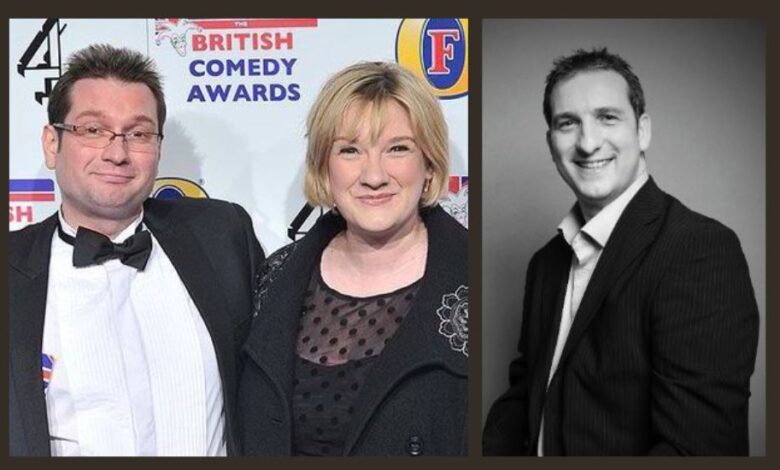
The name Andrew Millican appears regularly in online searches, yet concrete information about him remains limited. Unlike public figures whose careers, opinions, and personal choices are documented and debated, Andrew Millican is best described as a private individual who became known largely through association rather than personal visibility.
In a digital age where nearly everyone leaves a trail, his relatively low footprint stands out. This has led to curiosity, speculation, and in some cases confusion, especially when multiple people share the same name. For readers coming across the name for the first time, or those trying to separate fact from assumption, it helps to slow down and look at what is actually known—and just as importantly, what is not.
This piece takes a careful, balanced approach. Rather than filling gaps with guesswork, it focuses on verifiable context, the reasons for public interest, and the broader issues that arise when private individuals are discussed online. At Newsta, the goal is to provide clarity without crossing lines, and that principle guides every section below.
Why Andrew Millican Draws Public Attention
Andrew Millican is most commonly referenced because of a past marriage to a well-known British comedian. That relationship, which took place before her rise to widespread fame, has been mentioned in interviews and personal reflections about her early adult life. As her public profile grew, interest naturally extended to people who were part of her earlier story.
This pattern is not unusual. When someone becomes successful or visible, audiences often look backward, trying to piece together formative moments. Former partners, early collaborators, or past employers can become part of that narrative, even if they never sought attention themselves.
In Andrew Millican’s case, the public interest is almost entirely indirect. He has not built a career in entertainment, politics, or business that would place him in the spotlight. There are no widely known public statements, published works, or media appearances attributed to him. His name appears mainly in biographical context, often briefly and without detail.
It’s important to understand the distinction here. Being mentioned in another person’s life story does not make someone a public figure in their own right. The attention comes from proximity, not action. This distinction matters because it shapes how information should be handled and interpreted.
What Is Known, What Is Reported, and What Remains Private
When researching Andrew Millican, information tends to fall into three broad categories: confirmed facts, commonly reported details, and areas where little or nothing reliable is available.
Confirmed and Generally Accepted Facts
There are a few points that are widely accepted and consistently reported across sources:
- Andrew Millican was married in the late 1990s.
- The marriage ended several years later, before his former spouse became widely known.
- He has chosen to remain out of public view since then.
These facts are typically mentioned without embellishment. They form the basic framework of why his name appears at all, but they do not reveal much about him as a person.
Commonly Reported but Limited Details
Some reports suggest general background information, such as where he lived during that period of his life or the type of work he may have done. These details are usually presented in broad terms and without supporting documentation. They are not inherently controversial, but they are also not confirmed through primary sources.
This is where readers need to be cautious. When multiple blogs repeat the same small set of claims, it can create the impression of certainty even when the original information was never firmly established. Repetition alone does not equal verification.
Areas That Remain Private
Many aspects of Andrew Millican’s life are not publicly known, including:
- His current profession or career path
- His personal relationships after divorce
- His financial status or business involvement
- His views, beliefs, or public opinions
The absence of this information is not a gap that needs to be filled. It reflects a choice to live privately, a choice that deserves respect. Not every unanswered question is an invitation for speculation.
The Challenges of Writing About Private Individuals
Writing about someone like Andrew Millican highlights a broader challenge in modern media. Search engines reward content, and curiosity drives clicks, but ethics and accuracy still matter. When information is scarce, the temptation to stretch limited facts into a full narrative can be strong.
A useful comparison is to imagine a person who once worked at a company that later became famous. That early employee might be mentioned in a timeline, but their role does not define the company’s future success, nor does the company define their entire life. Treating them as a central figure would distort reality.
The same principle applies here. Andrew Millican’s name appears because of timing and connection, not because of public action. Responsible coverage keeps that context clear.
From a legal and ethical standpoint, this approach also reduces risk. Making assumptions about motivations, finances, or personal conduct—especially without evidence—can be harmful. Even neutral-sounding speculation can create false impressions that linger online far longer than corrections.
At Newsta, this is why restraint matters as much as curiosity. Providing readers with accurate context, while clearly marking the limits of available information, builds trust on both sides.
Identity Confusion and the Digital Name Problem
Another reason Andrew Millican’s name generates interest is that it is not unique. Multiple individuals share the same name across different professions and locations. This creates a common online problem: identity overlap.
For example, one Andrew Millican might work in a technical field, another in education, and another in a completely unrelated industry. When search results mix these profiles together, details can bleed from one person to another. A job title, location, or photo may be incorrectly assumed to belong to the wrong individual.
This issue is increasingly common and not limited to this case. As more data becomes searchable, name-based assumptions can lead to errors. Readers may think they are learning more about one person when they are actually reading about someone else entirely.
A simple way to think about this is to imagine searching for “Alex Johnson” or “Michael Lee.” Without additional context, it is almost impossible to be sure which individual is being referenced. The same caution applies here.
When researching or writing about Andrew Millican, it is essential to separate confirmed context from coincidental matches. Failing to do so can unintentionally spread misinformation, even when intentions are neutral.
Respecting Privacy While Answering Public Curiosity
Public curiosity is natural. People want stories, connections, and explanations. But curiosity does not override privacy. Andrew Millican’s case is a reminder that not everyone associated with a public figure chooses—or deserves—to live under ongoing scrutiny.
There is also a broader lesson here about how we consume information. When details are limited, it can be tempting to assume that something is being hidden or withheld. In reality, the simplest explanation is often the correct one: some people just live ordinary lives away from public platforms.
That ordinariness does not make a story less valid. In fact, it makes it more relatable. Many people have past relationships that shaped them, ended, and then became part of history rather than daily life. Most do not expect those chapters to be revisited decades later by strangers.
From a content perspective, the responsible path is clear. Stick to what can be stated with confidence. Acknowledge the boundaries. Avoid turning absence into implication.
This approach benefits readers too. It replaces rumor with clarity and replaces speculation with perspective.
Conclusion: What the Name Andrew Millican Really Represents
Andrew Millican is not a mystery waiting to be solved. He is a private individual whose name appears in public searches because of a past connection, not because of public ambition or controversy. The limited information available reflects a life lived largely outside the spotlight, and that choice deserves recognition.
The most important takeaway is not a list of biographical details, but an understanding of context. Knowing why a name appears, and why so little follows it, helps readers interpret information responsibly.
At Newsta, the aim is always to balance curiosity with care. In cases like this, that balance means acknowledging interest without inflating significance, and presenting facts without forcing conclusions.
Sometimes, the most accurate story is also the simplest one.
Frequently Asked Questions (FAQs)
Who is Andrew Millican?
Andrew Millican is a private individual best known for a past marriage that took place before his former spouse became widely known. He has not sought public attention and does not have a public-facing career.
Why do people search for Andrew Millican?
Most searches happen due to curiosity around his name appearing in biographical discussions related to a well-known public figure. The interest is contextual rather than based on his own public actions.
Is Andrew Millican a public figure?
No. Andrew Millican is not considered a public figure. He has not built a career in entertainment, politics, media, or business that places him in the public spotlight.
What does Andrew Millican do for a living?
There is no confirmed, up-to-date public information about his current profession. Any claims beyond general descriptions should be treated cautiously, as he has kept his personal and professional life private.
Is there verified information about Andrew Millican’s current life?
Very little. Details about his current location, career, or personal relationships are not publicly documented, which suggests a deliberate choice to remain private.
Are there multiple people named Andrew Millican?
Yes. The name is shared by more than one individual, which can cause confusion online. Not all information found under that name refers to the same person.
Why is it important to be careful when reading about Andrew Millican online?
Because limited verified information exists, speculation and recycled content can easily create false impressions. Reading responsibly means focusing on confirmed context rather than assumptions.
Has Andrew Millican spoken publicly about his past?
There are no known public interviews, statements, or media appearances from him. Most references come from biographical context rather than direct commentary.
Is Andrew Millican active on social media?
There is no confirmed public social media presence linked to him. Accounts with similar names may belong to different individuals.
Why does privacy matter in cases like this?
Not everyone connected to a public story chooses public life. Respecting privacy helps prevent misinformation and keeps discussions fair, accurate, and ethical.