Catalytic Converter Repossession Technician in San Jose: A Comprehensive Guide

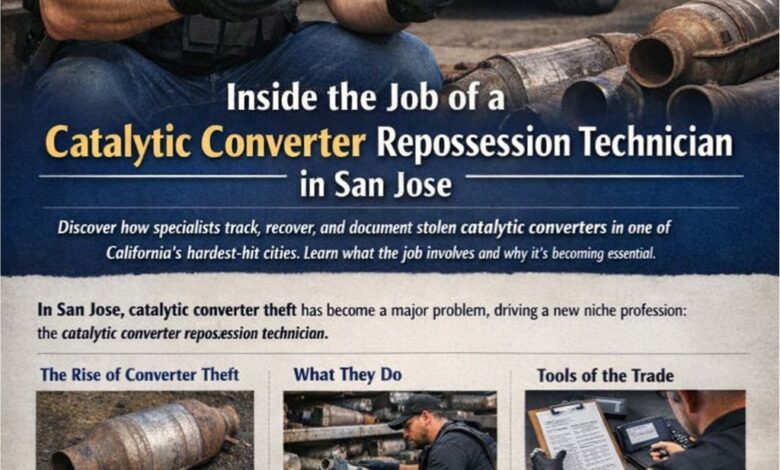
The rise of catalytic converter theft across the United States has created new challenges for vehicle owners, law enforcement agencies, and automotive professionals. In cities like San Jose, California, where theft rates have surged over the past decade, a specialized role has begun to emerge: the catalytic converter repossession technician. This professional works within the broader automotive recovery and investigation ecosystem, helping identify, recover, document, and return stolen catalytic converters.
This article explores the role of catalytic converter repossession technicians in San Jose, how the job developed, what responsibilities it involves, and why the position has become increasingly important in modern urban environments.
Understanding Catalytic Converters and Their Value
A catalytic converter is a key component in a vehicle’s exhaust system. Its purpose is to reduce harmful emissions produced by the engine. Inside the converter are precious metals such as platinum, palladium, and rhodium. These metals act as catalysts that help convert toxic gases into less harmful substances before they exit the vehicle.
Because these metals are rare and valuable, catalytic converters have become a major target for thieves. Even a single converter can contain metals worth hundreds of dollars when processed and sold through scrap markets.
The high resale value of these metals has driven a large underground market for stolen converters. As a result, catalytic converter theft has become one of the fastest-growing types of vehicle-related crimes in several regions of the United States, including California.
Why Catalytic Converter Theft Is a Major Issue in San Jose
San Jose has experienced a sharp increase in catalytic converter theft in recent years. Several factors contribute to this problem:
- High vehicle density – San Jose has a large number of vehicles parked in residential areas, apartment complexes, and public lots.
- Hybrid vehicle popularity – Vehicles like the Toyota Prius are common in the Bay Area and are particularly attractive targets because their converters contain higher concentrations of precious metals.
- Quick theft process – Skilled thieves can remove a catalytic converter in less than two minutes using simple tools.
- Strong resale market – Scrap metal buyers and metal refiners provide an outlet for stolen converters.
The rise in theft has forced cities, law enforcement agencies, and automotive professionals to develop new strategies for tracking and recovering stolen converters. This is where catalytic converter repossession technicians play a crucial role.
What Is a Catalytic Converter Repossession Technician?
A catalytic converter repossession technician is a professional who specializes in identifying and recovering stolen catalytic converters. While the title itself is not always standardized, the work often overlaps with several related fields, including automotive recovery, scrap metal compliance, and theft investigation.
These technicians may work with:
- Law enforcement agencies
- Insurance companies
- Auto repair shops
- Scrap metal recycling facilities
- Vehicle recovery companies
Their primary objective is to locate and reclaim catalytic converters that were stolen or illegally sold.
Key Responsibilities of the Role
The work of a catalytic converter repossession technician involves several specialized tasks that require technical knowledge, investigative skills, and familiarity with automotive components.
Identification of Catalytic Converters
Technicians must understand how to identify catalytic converters from different vehicle models. Each converter has unique characteristics, including:
- Shape and size
- Manufacturer markings
- Serial numbers
- Welding patterns
By examining these details, technicians can determine whether a converter belongs to a particular vehicle or if it may have been stolen.
Inspection of Scrap Yards and Recycling Centers
One of the most important aspects of the job involves visiting scrap yards and recycling facilities. Technicians inspect inventory to ensure that converters being sold or processed are legitimate.
This process may include:
- Reviewing purchase records
- Checking seller identification
- Examining converters for tampering or unusual markings
- Verifying ownership documentation
These inspections help prevent stolen converters from entering the recycling chain.
Documentation and Evidence Handling
When a suspected stolen converter is found, technicians must document it carefully. This typically includes:
- Photographing the converter
- Recording serial numbers or etched markings
- Creating detailed reports
- Logging the part into an evidence database
Proper documentation is essential for legal proceedings and insurance claims.
You May Also Read About: Alex 2nd Number 728-223-1380
Collaboration With Law Enforcement
Catalytic converter repossession technicians often work closely with police departments and investigative units. They may assist in operations that target theft rings or illegal scrap metal businesses.
In some cases, technicians help law enforcement:
- Identify converters found during raids
- Trace stolen parts back to original vehicles
- Provide expert testimony in court cases
Their technical expertise helps investigators build stronger cases against organized theft groups.
Returning Recovered Converters
When a converter is confirmed to belong to a specific vehicle owner, the technician may coordinate its return. This process can involve working with insurance companies, auto shops, and the original vehicle owner.
Although many stolen converters are melted down before they can be recovered, successful repossessions do occur when parts are located quickly.
Skills Required for the Job
Working as a catalytic converter repossession technician requires a combination of mechanical knowledge and investigative ability.
Important skills include:
Automotive Knowledge
Technicians must understand vehicle exhaust systems, catalytic converter designs, and the differences between various makes and models.
Attention to Detail
Identifying stolen converters requires careful observation of markings, welds, and metal wear patterns.
Investigative Thinking
Many cases involve tracing converters through scrap dealers or online marketplaces. Technicians must analyze patterns and gather evidence.
Legal Awareness
California has strict laws regarding catalytic converter sales and possession. Technicians must understand these regulations to ensure proper compliance.
Communication Skills
Working with law enforcement, scrap dealers, and vehicle owners requires clear communication and professional documentation.
Tools Used by Repossession Technicians
Catalytic converter repossession technicians use a variety of tools and technologies in their work.
Common tools include:
- Portable inspection lights
- Metal identification equipment
- VIN and part number databases
- Digital cameras for evidence documentation
- Automotive diagnostic tools
Some technicians also use specialized databases that track stolen catalytic converters across regions.
Laws and Regulations in California
California has introduced several laws aimed at reducing catalytic converter theft and illegal resale.
These laws often require scrap metal dealers to:
- Record seller identification
- Document vehicle ownership for converters
- Maintain transaction records
- Report suspicious sales to authorities
Possessing catalytic converters without proof of ownership can result in criminal charges. These regulations make it easier for repossession technicians and investigators to track stolen parts.
Prevention Programs in San Jose
San Jose has implemented several initiatives designed to prevent catalytic converter theft.
Converter Etching Programs
Local authorities and auto shops offer programs that etch a vehicle’s license plate number onto the catalytic converter. This marking makes it easier to identify the owner if the converter is stolen and recovered.
Community Awareness Campaigns
Public education campaigns encourage residents to:
- Park in well-lit areas
- Install anti-theft devices
- Report suspicious activity
- Use vehicle alarms
These prevention strategies reduce theft opportunities and support recovery efforts.
You May Also Read About: I-75 Power Line Shutdown
The Role in Combating Organized Theft Rings
Many catalytic converter thefts are connected to organized criminal networks. These groups often operate across multiple cities and states, collecting large quantities of stolen converters before selling them to metal processors.
Catalytic converter repossession technicians help disrupt these networks by identifying suspicious inventory and assisting investigations that lead to arrests and prosecutions.
Their work provides critical evidence that connects theft operations to illegal metal sales.
Career Path and Opportunities
While the job title “catalytic converter repossession technician” may not always appear in traditional job listings, professionals working in this field often come from related careers.
Common backgrounds include:
- Automotive mechanics
- Vehicle recovery specialists
- Scrap metal compliance inspectors
- Insurance investigators
- Auto theft detectives
With the continued focus on combating catalytic converter theft, opportunities in this niche field may continue to grow.
Future Outlook
As vehicle technology evolves and theft prevention measures improve, the methods used by criminals may also change. However, the demand for professionals who understand converter identification, recovery procedures, and scrap metal regulations is likely to remain strong.
Cities like San Jose are investing more resources in tracking and preventing catalytic converter theft, which means skilled technicians will continue to play a vital role in protecting vehicle owners and supporting law enforcement.
Conclusion
The catalytic converter repossession technician represents a specialized role born out of a growing automotive crime problem. In San Jose, where catalytic converter theft has had a significant impact on residents and businesses, these professionals help bridge the gap between automotive expertise and investigative work.
By identifying stolen converters, inspecting scrap operations, documenting evidence, and assisting law enforcement, catalytic converter repossession technicians contribute to the fight against organized vehicle theft.
As cities continue to develop new strategies for preventing catalytic converter crime, the work of these technicians will remain an important part of maintaining accountability in the automotive recycling industry and protecting vehicle owners from costly losses.