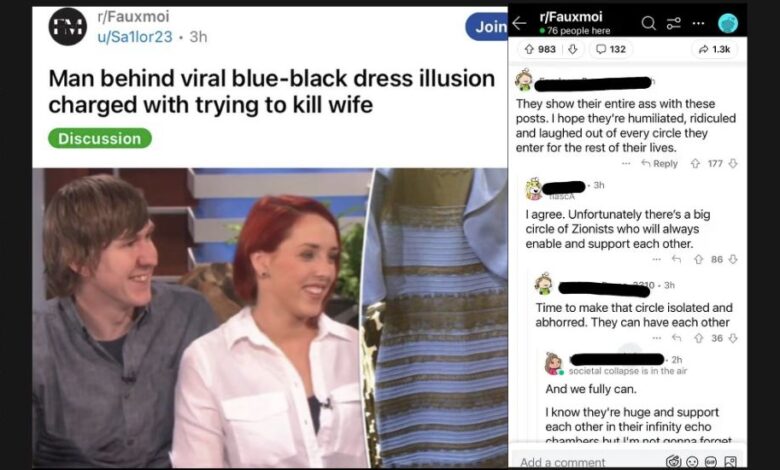
In the last several years, celebrity gossip has undergone one of its most dramatic evolutions since the rise of the early-2000s tabloids. What used to come exclusively from paparazzi photos, glossy magazines, and insider tipsters has now become a living, breathing ecosystem powered by everyday internet users. Among the digital spaces leading this shift is r/Fauxmoi, a Reddit community that has exploded in size, influence, and cultural presence since its launch in 2020.
Today, with millions of subscribers and tens of thousands of weekly active contributors, r/Fauxmoi has transformed from a niche celebrity-gossip hangout into a sophisticated, crowdsourced “zeitgeist archive.” It is a subreddit that blends gossip, analysis, PR dissection, social commentary, and meme culture—while proudly branding itself as the internet’s “safe space” for talking about celebrity culture.
This long-form exploration dives into what r/Fauxmoi actually is, how it grew, why so many people flock to it, the controversies that have shaped it, and what the subreddit reveals about our obsession with fame in a world where everyone is part of the media.
What Is r/Fauxmoi? The Basics
At its core, r/Fauxmoi is a Reddit subreddit created in June 2020. The name is a playful spin on the wildly popular Instagram account Deuxmoi, which became infamous for sharing celebrity blind items and anonymous tips. But while Deuxmoi revolves around a single anonymous operator posting insider submissions, r/Fauxmoi is fundamentally collective—a space where thousands contribute, debate, and analyze celebrity news in real time.
The subreddit describes itself as:
“The cultural zeitgeist archivists.”
And that tagline reveals its identity. The community isn’t just gossiping—it is collecting, cataloging, and interpreting pop culture as it unfolds.
Rapid Growth and Massive User Base
Within a remarkably short time, r/Fauxmoi has grown to more than 3.8 million members, with over 4 million weekly visitors and tens of thousands of posts and comments every week. This level of activity is rare even among large Reddit communities. What it signals is simple:
People are hungry for gossip—but not the outdated, tabloid-style gossip of old.
They want context, conversation, perspectives, and shared curiosity. And Reddit, unlike Instagram or TikTok, allows for long-form analysis, nuanced debates, and deep-dive threads.
From Deuxmoi to Fauxmoi: The Shift to Crowdsourced Gossip
Although the name “Fauxmoi” references Deuxmoi, the two platforms operate in almost opposite ways.
Deuxmoi: Single Voice, Anonymous Tips
Deuxmoi is essentially a modern gossip column run by one personality. Tips come through DMs. Posts appear as Instagram stories. The voice is centralized.
Fauxmoi: Crowd, Community, and Collective Analysis
Fauxmoi rejects the idea that one source should have the power to shape celebrity narratives. Instead, it functions like a social investigation lab, where:
- Users share gossip sourced from TikTok, magazines, blind-item sites, podcasts, and social media.
- Other users analyze, fact-check, debate, and build on the original post.
- Massive comment sections become mini-articles of their own.
This shift reflects a broader cultural movement:
Gossip is no longer something consumed, but something co-created.
The audience has become the analyst.
Inside the Subreddit: How Discussions Are Structured
One reason r/Fauxmoi feels more organized—and more addictive—than other gossip communities is its wide variety of post categories, known as “flairs.” These flairs turn chaos into structure, allowing users to filter content by type and tone.
Major Fauxmoi Categories Include:
- DISCUSSION – The heart of the subreddit. Open-ended celebrity talk of any kind.
- TEA THREAD – Live gossip drops, rumor roundups, unfolding drama.
- BLIND ITEM – Users share blinds from sites like Crazy Days and Nights or Deuxmoi-style submissions.
- FAUXMOI FORENSICS – Deep-dive investigations into timelines, PR moves, relationship clues, or suspicious coincidences.
- CELEBRITY CAPITALISM – Posts exploring the business behind fame: PR deals, branding, contracts, crisis management.
- POP CULTURE POSTMORTEM – Long-form analysis of trends, scandals, or shifts in the entertainment industry.
- LIVE THREADS – Real-time reactions during award shows, premieres, or breaking news.
- SATIRE – Humorous, parody, or exaggerated gossip posts.
- BREAKUPS/MAKEUPS/KNOCKUPS – Relationship, pregnancy, and romance speculation.
- POLITICS – When public figures intersect with political or social issues.
These categories help the community function almost like a magazine with multiple sections—investigative journalism, humor, commentary, fashion, and more.
The Culture of Fauxmoi: Civility, Humor, and Community Rules
While gossip can easily become toxic, r/Fauxmoi tries to maintain a tone that is often more analytical and less cruel than many gossip spaces online.
Rule #1: Keep It Civil
The mods of the subreddit repeatedly emphasize that r/Fauxmoi is a “civil gossip space.” Body-shaming, hate speech, misogyny, racism, and harassment are not tolerated.
The goal is not to be mean just for entertainment. The goal is to:
- examine celebrity culture,
- question PR narratives,
- decode media manipulation,
- share rumors responsibly,
- and create a community that can engage without being hostile.
More Observation Than Degradation
Because the subreddit wants to frame itself as a thoughtful place to discuss pop culture, many threads lean more toward analysis than pure dragging. Users regularly post long essays discussing:
- how publicists cultivate celebrity relationships,
- why certain scandals are amplified while others are silenced,
- how capitalism and branding shape celebrity behavior,
- and the rise of parasocial relationships in modern fandom.
This mixture of gossip and cultural critique is one of the biggest reasons for the sub’s popularity.
What People Discuss on Fauxmoi: The Big Themes
Across years of activity, several core themes constantly reappear.
1. Blind Items and Rumor Culture
Blind items have always fascinated pop culture obsessives. But on Fauxmoi, blind items don’t just get reposted—they get dissected. Users cross-reference:
- old interviews
- paparazzi timelines
- TikTok theories
- relationship histories
- PR cycles
The community often treats blind items like puzzles to be solved.
2. Celebrity Capitalism
This category explores the mechanics behind fame:
- Why did a celebrity suddenly rebrand?
- Who benefits from a public breakup?
- Which scandals were planned or mitigated by PR teams?
- How do studios protect stars during film cycles?
This framing positions celebrity drama as a business strategy, not mere coincidence.
3. Social Media and Virality
With TikTok, Instagram, and X (Twitter) dominating celebrity discourse, Fauxmoi is often the first place where viral content gets unpacked in detail. A single 10-second TikTok clip can generate thousands of comments.
4. Image Crafting and Public Persona
Fauxmoi users love examining:
- How celebrities curate authenticity
- Why certain influencers get mainstream acceptance
- How scandals are managed through silence campaigns
This makes the subreddit feel part-gossip, part-media literacy class.
The Influencer Backlash: The Ethan Klein vs. Fauxmoi Controversy
One of the most dramatic moments in r/Fauxmoi history came when YouTuber and podcaster Ethan Klein (H3H3 Productions) clashed with the subreddit. What began as criticism snowballed into accusations of brigading, harassment, and misuse of his platform.
What Happened?
- The mod team publicly accused Klein of targeting and attacking multiple subreddits, including Fauxmoi.
- Klein allegedly encouraged his large audience to flood these communities with criticism.
- Mods accused him of fostering an environment that led to doxxing threats and targeted harassment against individual Reddit users.
- The conflict played out on livestreams, Reddit threads, and social media, becoming a minor internet-culture saga.
Why This Matters
This controversy exposed the tension between:
- Influencers, who dislike anonymous gossip communities calling them out
- Gossip communities, who see influencers as part of celebrity culture and therefore “fair game”
It also raised questions about:
- the ethics of directing audiences toward specific individuals,
- the vulnerability of moderators on large subreddits,
- and the power dynamics between platform creators and anonymous spaces.
Ultimately, the situation solidified Fauxmoi’s reputation as a subreddit willing to challenge powerful online personalities.
Moderation Challenges: Hate Speech, Brigading & Coded Language
Despite its attempt to remain civil, r/Fauxmoi has not avoided controversy. At different moments, the subreddit—especially during highly charged news cycles—has faced problems with:
- antisemitic tropes,
- coded hate speech,
- misogynistic “celebrity blame” framing,
- brigading from other subreddits,
- and misinformation rapidly spreading before verification.
Moderators have publicly discussed how difficult it is to navigate:
- fast-moving gossip,
- highly emotional celebrity drama,
- and politically loaded conversations around certain figures.
The subreddit has implemented stricter automoderator filters, but maintaining a line between gossip and harmful rhetoric remains an ongoing balancing act.
Why r/Fauxmoi Matters: What It Reveals About Modern Fame
r/Fauxmoi is more than a gossip forum—it is a reflection of how we now relate to celebrity culture.
1. Fame Is No Longer One-Way
In the old world:
Celebrities → Media → Public
In the new world:
Celebrities ↔ Media ↔ Influencers ↔ Social Audiences ↔ Reddit Communities
Fans now influence narratives. Communities like Fauxmoi collectively have more power than many tabloid writers.
2. People Want to Understand the Machinery Behind Fame
A big part of Fauxmoi’s appeal is the sense that users aren’t just consuming gossip—they’re pulling back the curtain.
Today’s digital audiences are savvy. They know publicists coordinate paparazzi shots. They know relationships can be PR. They know scandals are managed behind the scenes.
Fauxmoi becomes a place to decode the machine.
3. Gossip Becomes Culture Commentary
Threads on Fauxmoi often go deeper than “who’s dating who.” They become discussions about:
- power,
- capitalism,
- misogyny,
- fan behavior,
- social media influence,
- authenticity vs. branding,
- and ethical boundaries.
In that sense, Fauxmoi is a barometer for how internet culture is increasingly merging entertainment, identity, and politics.
The Future of r/Fauxmoi
As the subreddit continues to grow, several trends are likely to define its next chapters:
- More investigative-style posts as users get better at crowd-analyzing events
- Greater scrutiny from influencers, especially those who dislike commentary culture
- Possible expansion of spin-off communities with more specialized content
- Continuous debate about ethical boundaries in gossip
- Increased role as a “primary source” for online entertainment writers
- Tougher moderation challenges as membership increases
Regardless of where it goes, r/Fauxmoi has already secured its place as one of the internet’s most distinctive communities—half gossip room, half cultural think tank.
Conclusion: Why r/Fauxmoi Captures the Modern Zeitgeist
In a world drowning in content, r/Fauxmoi represents a new model for how we digest the lives of public figures. It sits at the intersection of entertainment, speculation, analysis, and collective investigation. It has become a digital newsroom, a gossip magazine, a cultural forum, and a live-commentary theater—all run by everyday people, not insiders.
The community reveals that today, ordinary users are not just passive observers of celebrity culture—they are active participants shaping how stories unfold. Discussions are deep, messy, humorous, thoughtful, chaotic, and often surprisingly insightful.
r/Fauxmoi isn’t just gossip. It is a cultural lens through which millions interpret fame, power, identity, and media.
As online celebrity culture continues to evolve, r/Fauxmoi will undoubtedly remain one of its most fascinating, influential, and sometimes controversial players.
Article Published by: Newsta
FAQs About r/Fauxmoi
1. What is r/Fauxmoi?
r/Fauxmoi is a popular Reddit community focused on celebrity gossip, blind items, pop culture analysis, and discussions about entertainment industry trends.
2. Why is it called “Fauxmoi”?
The name is a playful reference to Deuxmoi, an Instagram gossip account. “Fauxmoi” implies a fake or alternative version—emphasizing Reddit’s crowdsourced gossip style rather than a single insider.
3. How many members does r/Fauxmoi have?
The subreddit has over 3.8 million members, making it one of Reddit’s largest celebrity-focused communities.
4. What kind of content is posted on r/Fauxmoi?
Users post gossip threads, blind items, celebrity news breakdowns, PR analyses, viral TikTok discussions, event live threads, and deeper commentary on celebrity culture.
5. Is r/Fauxmoi related to Deuxmoi?
No. While the name references Deuxmoi, the two are not connected. Deuxmoi is a single Instagram account; Fauxmoi is a Reddit community run by moderators and users.
6. Is r/Fauxmoi reliable?
Like any gossip platform, reliability varies. Some posts are thoughtful and well-researched; others are rumors or speculation. The community often fact-checks claims in the comments.
7. Are blind items discussed on r/Fauxmoi?
Yes—blind items are one of the most popular content categories. Users share blinds from various sites and analyze the clues together.
8. Does r/Fauxmoi allow negative or harmful gossip?
The subreddit enforces strict rules against hate speech, harassment, body-shaming, and violent speculation. Moderators try to keep discussions civil, though heated debates can still happen.
9. What makes r/Fauxmoi different from other gossip communities?
Its blend of analysis, crowdsourced investigation, organized flairs, and emphasis on civility sets it apart. It feels more like a collective pop culture journal than a typical gossip forum.
10. Has r/Fauxmoi been involved in controversies?
Yes. The subreddit has faced issues related to coded hate speech, moderating sensitive topics, and public clashes with influencers like Ethan Klein, who criticized the community.
11. Can anyone post on r/Fauxmoi?
Yes—any Reddit user can post or comment, as long as they follow subreddit rules and flairs.
12. Are posts moderated?
Absolutely. The subreddit uses both human moderators and automated tools to enforce rules and remove harmful content.
13. Is r/Fauxmoi safe to use?
Yes. It’s a public Reddit community, though users are encouraged to maintain privacy, avoid sharing personal information, and treat gossip as entertainment—not fact.
14. Why is r/Fauxmoi so popular?
It blends entertainment, humor, cultural analysis, and mystery-solving in a way that appeals to casual fans and deep pop-culture enthusiasts alike.
15. Where can I read r/Fauxmoi?
You can visit the subreddit directly by searching r/Fauxmoi on Reddit or through the official website.