Hurricane vs Typhoon: What’s the Difference? Key Facts, Similarities, Formation & Safety Guide

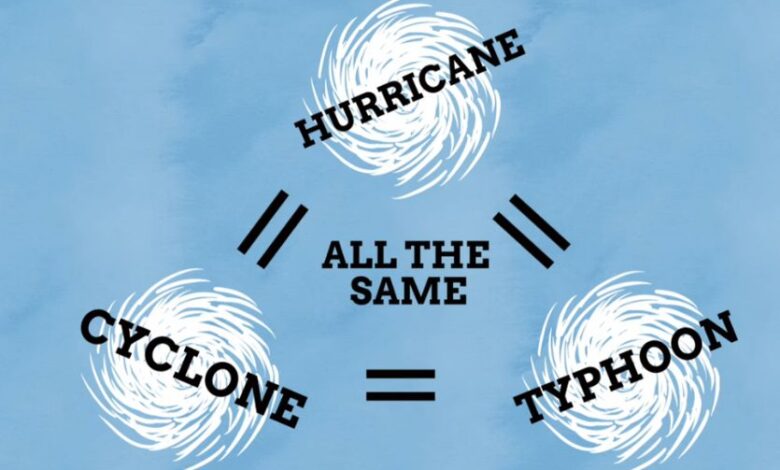
The roar of fierce winds, towering ocean waves, and relentless rain often dominate headlines whenever a major tropical storm approaches land. Whether the news reports mention a hurricane striking the Caribbean or a typhoon approaching Japan, many people wonder if these are two completely different weather events. The surprising truth is that hurricanes and typhoons are essentially the same type of storm. The distinction lies not in their strength or structure but in the part of the world where they form. Understanding this difference helps explain how tropical cyclones develop, why they receive different names, and how they impact millions of people every year.
Powerful tropical storms are among the most destructive natural disasters on Earth. They can reshape coastlines, flood entire cities, disrupt economies, and leave lasting effects on communities. As climate patterns continue to evolve, public awareness about hurricanes and typhoons has become increasingly important. Knowing how these storms form, where they occur, and how they are measured can help individuals better prepare for severe weather and separate common myths from scientific facts.
What Is a Hurricane?
A hurricane is a powerful tropical cyclone that develops over warm ocean waters in the Atlantic Ocean, the Caribbean Sea, the Gulf of Mexico, and the eastern or central North Pacific Ocean. Hurricanes are organized weather systems characterized by low atmospheric pressure, rotating thunderstorms, heavy rainfall, and sustained winds of at least 74 miles per hour (119 kilometers per hour).
These storms draw their energy from warm ocean water. As moisture evaporates from the sea surface, it rises into the atmosphere, where it cools and condenses into clouds. This process releases heat, fueling the storm and allowing it to grow stronger. When atmospheric conditions remain favorable, a hurricane can rapidly intensify into a dangerous weather system capable of producing catastrophic damage.
The Atlantic hurricane season officially runs from June 1 through November 30, although storms occasionally develop outside these dates. Activity usually peaks between August and October, when ocean temperatures are at their warmest.
What Is a Typhoon?
A typhoon is also a tropical cyclone with the same characteristics as a hurricane. The only difference is geographical location. Typhoons form in the northwestern Pacific Ocean, particularly near countries such as the Philippines, Japan, Taiwan, China, Vietnam, and South Korea.
The northwestern Pacific is the most active tropical cyclone basin in the world. Warm ocean temperatures across this vast region often allow storms to strengthen significantly before reaching land. Some typhoons become extraordinarily powerful, producing destructive winds, extreme rainfall, and massive storm surges that affect millions of people.
Although the name differs, the meteorological processes responsible for typhoon formation are identical to those that create hurricanes.
Hurricane vs Typhoon: The Main Difference
The biggest misconception surrounding hurricanes and typhoons is that they are separate types of storms. In reality, both belong to the same category of weather systems known as tropical cyclones. The distinction is based entirely on where they develop.
Storms that form in the Atlantic Ocean and the eastern or central North Pacific are called hurricanes. Storms forming in the northwestern Pacific Ocean are known as typhoons. Meanwhile, similar storms that develop in the Indian Ocean and the South Pacific are generally referred to as cyclones.
Aside from their regional names, hurricanes and typhoons share the same internal structure, energy source, life cycle, and destructive potential.
Why Do They Have Different Names?
Different parts of the world developed their own terminology long before global meteorological organizations established standardized forecasting methods. Regional weather agencies continued using familiar names for these storms because they reflected local traditions and historical usage.
Meteorologists today often use the scientific term “tropical cyclone” when discussing these storms collectively. This universal term eliminates confusion by emphasizing that hurricanes, typhoons, and cyclones are fundamentally the same weather phenomenon.
The naming convention simply helps identify where a storm originated rather than describing its strength or behavior.
How Hurricanes and Typhoons Form
The formation of a tropical cyclone requires several environmental conditions to occur simultaneously. Warm ocean water is the primary fuel source, with sea surface temperatures generally needing to exceed 26.5 degrees Celsius (80 degrees Fahrenheit). This warm water provides abundant moisture and energy.
As warm, moist air rises from the ocean surface, it creates an area of lower air pressure beneath it. More air rushes toward this low-pressure area, rises, and forms towering thunderstorms. The Earth’s rotation, known as the Coriolis effect, causes the developing storm to spin around its center.
Low vertical wind shear is another essential ingredient. Strong winds at different altitudes can disrupt the storm’s structure before it fully develops. High humidity throughout the atmosphere also helps sustain continuous thunderstorm activity.
When all these conditions remain favorable, the tropical disturbance can evolve into a tropical depression, strengthen into a tropical storm, and eventually become either a hurricane or a typhoon once sustained winds reach at least 74 miles per hour.
The Structure of These Powerful Storms
Every mature hurricane and typhoon contains several recognizable features that meteorologists use to evaluate storm intensity.
At the center lies the eye, a relatively calm area with light winds and sometimes clear skies. The eye typically ranges from 20 to 40 miles across, although its size varies between storms.
Surrounding the eye is the eyewall, the most dangerous portion of the storm. This region contains the strongest winds, heaviest rainfall, and most intense thunderstorms. Damage is often greatest when the eyewall passes directly over an area.
Extending outward from the eyewall are spiral rainbands. These curved bands contain heavy rain showers, gusty winds, and occasional tornadoes. They may stretch hundreds of miles away from the storm’s center, affecting areas long before the eye arrives.
Above the storm, upper-level outflow allows rising air to escape, helping maintain the storm’s circulation and supporting continued intensification.
Classification of Tropical Cyclones
Tropical cyclones progress through several stages based primarily on wind speed.
The earliest stage is known as a tropical depression, with sustained winds below 39 miles per hour. If winds strengthen to between 39 and 73 miles per hour, the system becomes a tropical storm and receives an official name.
Once sustained winds reach 74 miles per hour or greater, the storm is classified as either a hurricane or a typhoon depending on its location. Meteorologists then continue monitoring the storm for changes in intensity and movement.
Understanding Hurricane Categories
Hurricanes are commonly measured using the Saffir-Simpson Hurricane Wind Scale, which classifies storms into five categories according to sustained wind speed.
Category 1 hurricanes produce winds between 74 and 95 miles per hour and can cause moderate damage to buildings, trees, and power lines. Category 2 storms bring stronger winds capable of causing extensive structural damage and widespread power outages.
Category 3 hurricanes are considered major hurricanes. Their powerful winds can destroy roofs, uproot large trees, and severely damage infrastructure. Category 4 storms generate devastating winds that often leave communities without electricity or water for extended periods.
Category 5 hurricanes represent the highest classification, with sustained winds exceeding 157 miles per hour. These storms can produce catastrophic destruction, flatten buildings, and dramatically reshape coastal landscapes.
Although typhoons are often discussed using regional terminology, their intensity can be measured using comparable wind-speed standards.
What Is a Super Typhoon?
The term “super typhoon” is commonly used in the northwestern Pacific to describe exceptionally intense typhoons. These storms generally reach sustained winds of approximately 150 miles per hour or greater.
Super typhoons rank among the strongest tropical cyclones ever observed. They can generate enormous storm surges, widespread flooding, and wind damage across vast geographic areas. Some super typhoons have caused historic disasters in countries such as the Philippines and Japan.
Despite the dramatic title, a super typhoon is meteorologically comparable to an extremely powerful Category 4 or Category 5 hurricane.
Which Is Stronger: Hurricane or Typhoon?
Many people assume typhoons are naturally stronger than hurricanes because some of the world’s most intense storms have occurred in the Pacific Ocean. However, the name itself has no influence on storm strength.
A hurricane can become just as powerful as a typhoon if environmental conditions support rapid intensification. Likewise, a typhoon may remain relatively weak if it encounters cooler waters or unfavorable atmospheric conditions.
The actual strength of any tropical cyclone depends on factors such as sea surface temperature, atmospheric moisture, wind shear, ocean heat content, and the amount of time the storm spends over warm water.
The world’s strongest storms have included both hurricanes and typhoons, demonstrating that neither category holds an inherent advantage.
Why the Pacific Produces So Many Powerful Typhoons
The northwestern Pacific Ocean provides ideal conditions for tropical cyclone development. It contains vast expanses of warm water, high humidity, and favorable atmospheric circulation throughout much of the year.
Because storms often travel across long stretches of open ocean before reaching land, they have more time to strengthen. This helps explain why the Pacific frequently experiences numerous intense typhoons annually.
The Atlantic Ocean, while also capable of producing devastating hurricanes, generally has a shorter season and a smaller area of favorable conditions.
Common Hazards Associated with Both Storms
Wind is only one of the many dangers posed by hurricanes and typhoons. Heavy rainfall can trigger widespread flash flooding and river flooding hundreds of miles inland, even after winds begin weakening.
Storm surge remains the deadliest hazard for many coastal communities. Powerful winds push seawater toward shore, causing ocean levels to rise dramatically. Entire neighborhoods can become submerged within hours, leading to severe destruction and loss of life.
Large ocean waves accelerate coastal erosion and damage ports, bridges, and seawalls. Landslides frequently occur in mountainous regions saturated by persistent rainfall. Tornadoes may also develop within the storm’s outer rainbands, creating additional localized damage.
Long-lasting power outages, transportation disruptions, water shortages, and economic losses often continue long after the storm has passed.
Famous Hurricanes in History
Several hurricanes have become internationally recognized because of their devastating impacts.
Hurricane Katrina in 2005 caused catastrophic flooding in New Orleans following levee failures. Hurricane Harvey in 2017 produced record-breaking rainfall across Texas, while Hurricane Maria devastated Puerto Rico later that same year.
Hurricane Irma became one of the strongest Atlantic hurricanes ever recorded, affecting numerous Caribbean islands before reaching Florida. More recently, Hurricane Ian caused widespread destruction across Florida in 2022, highlighting the continuing risks associated with powerful tropical cyclones.
Famous Typhoons in History
The Pacific has also witnessed numerous historic typhoons.
Typhoon Haiyan, known locally as Yolanda, struck the Philippines in 2013 and remains one of the strongest tropical cyclones ever to make landfall. Its immense storm surge caused catastrophic flooding and significant loss of life.
Typhoon Tip, recorded in 1979, remains the largest tropical cyclone ever observed. Typhoon Mangkhut brought severe destruction to the Philippines, Hong Kong, and southern China, while Typhoon Meranti reached extraordinary wind speeds before impacting Taiwan and China.
These events demonstrate the tremendous destructive power that tropical cyclones can unleash regardless of regional naming conventions.
Safety Tips Before and During a Storm
Preparation is one of the most effective ways to reduce risks from hurricanes and typhoons. Families living in vulnerable regions should monitor weather forecasts closely and understand local evacuation procedures.
Emergency kits containing drinking water, nonperishable food, medications, flashlights, batteries, and important documents should be prepared well before storms arrive. Outdoor furniture and loose objects should be secured to prevent windborne debris.
Residents should never ignore evacuation orders issued by local authorities. Floodwaters can rise rapidly, making escape routes impassable within minutes. Staying indoors, away from windows, and following official updates remain essential throughout the storm.
After the storm passes, people should avoid floodwaters, damaged buildings, and downed power lines until emergency officials declare the area safe.
Climate Change and Tropical Cyclones
Scientists continue studying how climate change influences tropical cyclones. Although research remains ongoing, many studies suggest that warmer ocean temperatures may increase the likelihood of stronger storms and heavier rainfall.
Sea-level rise also increases the potential impact of storm surge, allowing coastal flooding to reach farther inland. While the total number of storms may not necessarily increase every year, many researchers expect the proportion of high-intensity hurricanes and typhoons to grow in a warming climate.
Improved forecasting technology, satellite monitoring, and emergency preparedness have significantly enhanced warning systems, giving communities more time to prepare for approaching storms.
Conclusion
Understanding the difference between a hurricane and a typhoon is surprisingly simple once the science is explained. Both are tropical cyclones powered by warm ocean waters, rotating around a low-pressure center and capable of producing destructive winds, torrential rainfall, flooding, and storm surge. The only real distinction is geographical. Hurricanes form in the Atlantic and eastern Pacific, while typhoons develop in the northwestern Pacific.
Although their names vary across the globe, their behavior follows the same atmospheric principles. Whether called a hurricane, typhoon, or cyclone, these storms deserve equal respect because of their immense power and potential to impact millions of lives. Staying informed, preparing ahead of time, and following official weather guidance remain the best defenses against nature’s most formidable tropical storms.